I have, I like to think, a healthy scepticism and caution towards most new things. It could well be a defence mechanism. As I age, my already limited capacity for change diminishes. I try and apply critical thinking to form an opinion, but some topics are just so big, so complex, even existential, that it’s impossible not to fall back on long held biases and prejudices. UFOs would fall into this category, but somehow I find the phenomenon easier to fathom.
Artificial intelligence (AI) is different. Where to start.
AI is one of the themes in my forthcoming novel. I must admit it required very little research in comparison to other aspects of the book, if you take the view AI will soon be able to do anything. I also took a rather dystopian angle towards its application(s). Not the tech per se. But what sits behind it. As we become increasingly augmented with tech, including AI, so the boundaries between personal privacy and corporate, or governmental control, become rapidly blurred. What data about us is artificial intelligence gathering? And what nefarious application lurks dormant in an otherwise innocent AI application, for example, ready to be activated by unscrupulous organisations in the future? Once you commit to some of this stuff, there’s no going back. Leastways I don’t think so. It’s like a pact with devil.
And this is before we even consider the potential for major disruptive AI evolution (or revolution) – if you believe them over there – allegedly coming. This will leave swathes of the population out of work, and many of us without purpose, so we’re told. I advise you not to search on the term, ‘the singularity’; a notional point in time when humanity disappears down the AI plughole. We’ve probably got between five and twenty-five years. Apparently.
However, the other side will argue otherwise. A golden age of human enlightenment and progress is just around the corner. Answers to all those big questions are within our grasp and breakthroughs in science, energy and medicine are just waiting to be discovered by some giant digital brain, in a box, by a water source (perhaps the only thing we and AI servers, or supercomputers, will ever have in common).
You probably know the basic arguments for and against by now, so I won’t bang on. Therefore let me bring it quickly back to the book, and to write the following words as both a fiction writer and a former journalist: I will not tolerate AI trying to replicate or report on the human experience. That is to say, write fiction in place of a human writer. Or interview a subject for a news article (I don’t think AI can do that yet). Sure, there are some exceptions, such as straight factual documenting. Facts are facts, right? (Err, no. It’s getting harder and harder to tell sugar from salt, not helped by the dis- and misinformation spun by bots and AI). I am probably writing this with a strong dose of self-interest, but nonetheless, as a consumer of creativity, as well as being a creator, I want to make a human connection with whatever it is I’m consuming; for it to have come from a place with a heart and soul. Otherwise, in my humble opinion, it’s only a vacuous, empty piece of code.
And yet.
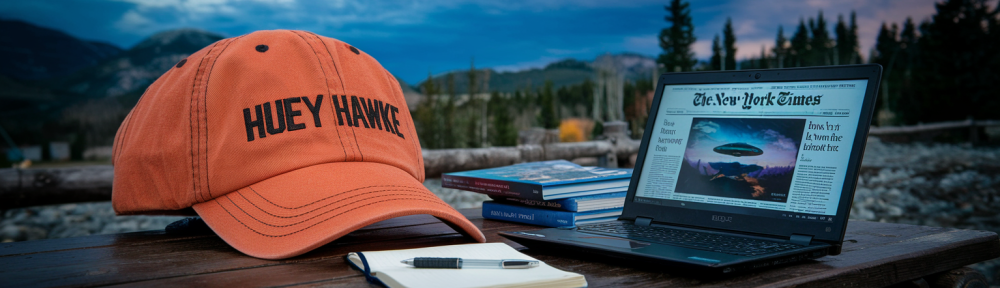
I’ve just spent days using AI to help me create images and artwork (is it artwork, though?). I’ve never harnessed AI for this purpose before. Heck, I don’t have (knowingly) any other AI tools, anywhere (yeah, I know, it’s everywhere we just don’t recognise it). I’m not going to explain this disturbing contradiction any more than that. Therein lies one of the many, many moral complexities we face, and the stakes are only going to get greater.
What I will say is I’ve disappointed myself in taking this course of (AI) action. Help me, advise me, please!
Subscribe to receive my latest short fiction and newsletter.