I’ve been following the UFO subject (or UAP, ‘unidentified anomalous phenomena’, as the US Pentagon recently rebranded UFOs) for quite a while. More specifically, I’ve been interested in ‘disclosure’; the global revelation ‘we are not alone’. For many folks I know UFOs, and what it could mean in the broader context (disclosure), remains way off their radar. ‘UFO’ is not so much a taboo topic these days, rather it’s something most people don’t pay much heed to. And those who are paying attention, myself included, are still perceived as mildly cranky.
But something in the water has most definitely changed, particularly in the US in recent years. More people are talking about UFOs. A 2023 Ipsos poll found 42 percent of Americans believe in UFOs, up from 34 percent the year before (a similar YouGov survey). With this growing ‘belief’ does it naturally follow pressure upon global leaders to reveal what they know might follow?
Looking for answers
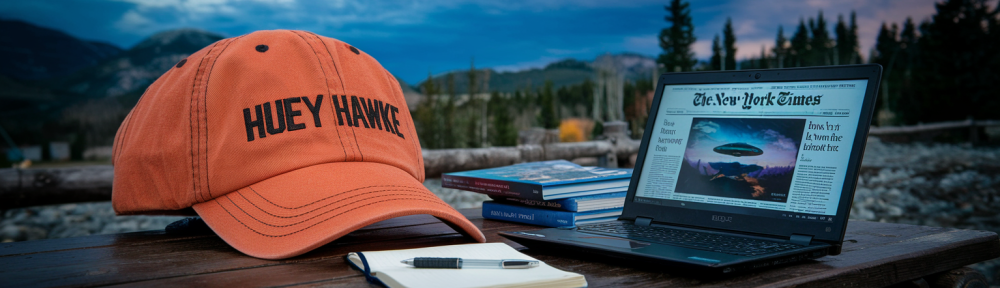
Why am I writing this now? Because it’s relevant to my forthcoming 2025 novel (the title image for this particular post), I’m also curious, but mostly it appears timely. Disclosure chimes with the times. In the US just this week (w/c 10 February 2025) a new Republican-led taskforce was announced to disclose historic government files and ‘secrets’ from past decades, including those related to the assassination of JFK, and yes, you guessed it, UFOs. But this taskforce is only the latest in a series of nuanced developments perhaps signposting a growing acceptance of the subject beyond the UFO community, and towards something a little more profound.
Growing public acclimation of the UAP topic might reflect other indicators we’re looking for meaning and answers more broadly, perhaps a consequence of the times we’re living through.
To cite one or two tangential examples, the world’s geopolitical instability has coincided with an uptick in sales of the Bible (I discussed in an earlier post), and in 2024 religious and spiritual books sold in greater numbers among younger men, particularly in the US. These figures are from Amazon, and I guess if anyone knows anything about reading trends, it does. What’s also interesting was the simultaneous swing away from sales of political books. And aligned to the rise in religious book sales (in 2024, Bible sales were up 40 percent) was the increased church attendance of Gen Z men, opting too for traditional Catholic and Orthodox churches instead of the mega churches popular with their parents. Not only, Gen Z is apparently the first generation in centuries where male church attendance is higher than female. What’s going on?
I also wrote recently that reported UFO sightings swell during times of turmoil. Perhaps, in these challenging times, we’re increasingly looking to the heavens seeking answers.
The question of ‘disclosure’ has occupied my mind for several years; as I wrote my novel dealing with the subject. That’s now written, edited and prepped, and so today I think on the subject from a wider point of view. The fact is others, including prominent ufologist and historian, Richard Dolan, and his co-author; TV producer, director and writer (and former journalist), Bryce Zabel, are far better qualified to discuss the subject in detail, having written one of the most authoritative books on the subject more than a decade ago; AD: After Disclosure, looking at the subject in the round and discussing the conditions – and scenarios – under which disclosure might occur. However, since that book was written, the plot has most definitely thickened.
I like to think those of us with an enquiring mind, open to the idea alien or non-human intelligence exist, are critical thinkers. We don’t have tinfoil hats or believe Martians have a base on the moon, any more than we think the Earth is flat. But we do think something’s going on we’re not being told. What that could be is debateable. And what the possible repercussions are, should there be greater transparency on the issue, remains the subject of much pondering and debate. Not widely, but certainly among those in the UFO community.
One idea posits ‘disclosure’ could be the subject of discussion within the new US government right now, as evidenced with the new taskforce announcement. And where the US goes, the world follows. That’s what happens when it’s the planet’s preeminent economy, a global policeman, and many nations are locked-in to its primacy through trade deals and political influence.
I’m in the UK, and most discussion on UFOs, and disclosure, remains focussed on the US. The United Kingdom, once described as the most successfully secretive nation on Earth (it must be our reserved nature. I’m not being entirely serious – British irony) is way behind the United States in bringing this subject into the light. Yet even across the pond, the subject is still not mainstream in perhaps the way it should.
Other countries, including some in Europe such as France, Italy and Spain, have marginally greater transparency around the UFO subject; through official reporting and media outlets. South American nations are more open still. This is perhaps a sociological phenomenon with many indigenous peoples in these countries, whose ancient customs and religions are still observed and celebrated. They have, it’s argued, a stronger spiritual connection to the world around them, their present cultures and beliefs established way back in the mists of time, and in some instances this means an appreciation of other beings. Quite natural therefore to talk about what some might describe as ‘alien visitors’. Interestingly, common themes such as these abound across different religions, cultures and continents.
Abundance of evidence
Nonetheless, wherever you sit on the belief scale, the statement ‘we are not alone’ remains mostly an argument, or theory. It is not a proven, undisputed, understood and universal truth. ‘Where’s the actual hard evidence’ most people will ask.
You don’t need to look too deeply to find an abundance of UFO data, evidence and witness testimony, but so far none of it has been deemed ‘smoking gun’. Further, the bar as to what constitutes admissible proof seems subjective and always on the rise. That leaves a problem. In the absence of such evidence there is a general acceptance only a government, particularly a US administration, could shift public thinking towards the notion something is out there. Many millions of people don’t need to be persuaded. They ‘know’. It’s not a belief, it’s utter certainty. This may be due to a personal experience, or religious conviction. However, when we talk about a ‘universal truth’, we’re talking all of us. You and I. Whatever our nationality or beliefs.
This is where it gets complicated, if it wasn’t already, and why I’m curious about a) what is going on conversationally, culturally and politically, with regard to disclosure, and b) what happens next if it comes to pass a government (for argument’s sake, the US) announces the existence of a non-human intelligence (NHI).
If I take the first point, ‘what’s going on?’, any ufologist, or disclosure advocate, including many US politicians and bureaucrats past and present, will tell you times have changed since the New York Times article of December 2017. There’s not time or space to go into all that here, I suggest you have a read yourself. Suffice to say the article moved the dial on public awareness of UFOs, and so began a process where today more people are talking about the existence of extra-terrestrials, perhaps even Earth-based NHI (and I don’t mean dolphins, octopus, or any other intelligent terrestrial species). What this actually means, and where this is headed, I don’t believe anyone fully understands.
However, if we look at the zeitgeist, there are a few indicators we may be shifting towards being told something. From public congressional hearings in the US (the first UAP-focussed hearing in more than fifty years took place in 2022; the House Permanent Select Committee on Intelligence), through to whistle-blowers coming forward; former USAF intelligence officer, David Grusch, being foremost among them (he worked at the National Geospatial-Intelligence Agency (NGA), and the National Reconnaissance Office (NRO), and delivered intelligence briefings to the White House). Many others have started to speak out too, despite possible repercussions to their careers and livelihoods. Whistle-blower protections were introduced in the US, but many argue they don’t go far enough – but that’s another topic for another day.
All this is to say, why spend taxpayer money on investigations and hearings if nothing needs to be discussed. Are all these credentialed individuals talking more openly about the existence of aliens and NHIs wrong? Many of them have spoken under oath. That’s a big deal. Throw into the mix the establishment, within the Pentagon, of AARO (All-domain Anomaly Resolution Office), leading the US government’s investigation into UFOs, and it does beg the question.
Perhaps something is in the pipeline then?
Acceptance in our wider culture
There’s the growing preponderance of UFO/disclosure-related documentaries and movies. From J.J. Abrams’ exec-produced UFO (2021) documentary series, to Dan Farah’s (Ready Player One) new The Age of Disclosure doc, due for a ‘coveted premiere’ at the South by Southwest Film Festival later this spring. There are many other documentaries from recent times following in a similar vain attempting to address the subject in a thoughtful, serious manner. These include James Fox’s The Program‘ (2024) and Moment of Contact (2022). I urge you to watch both.
In the movie sphere, the subject is still treated more as entertainment. We have Nope (2022), and a little farther back, Arrival (2016), to name two better-known films. There are plenty. The public loves an ‘alien’ movie.
But now we have Spielberg entering the fray.
Two of the director’s best-loved films dealt with the subject of ‘aliens’; Close Encounters of the Third Kind (1977), and of course, E.T. the Extra-Terrestrial (1982), not forgetting War of the Worlds (2005), starring Tom Cruise.
This new Spielberg movie feels different. Most certainly the timing does. The flick, slated for release in 2026, has been retitled Disclosure. It was due to be called, The Dish. A quick look at the rollcall of actors (Colin Firth, Emily Blunt, Josh O’Connor, Eve Hewson, Colman Domingo, and Wyatt Russell) says ‘serious’. We can only guess what the ‘UFO’ movie plotline is, but the title’s a potential giveaway. Interestingly, rumours abound that certain Hollywood movers and shakers have, to some extent, been briefed on the UFO subject in order to drive public awareness (and acceptance) through big budget pop culture productions. Some shows, including the 1990s’ The X Files, were even speculated to have secret advisors from US intelligence.
Speculation. That word again.
Then there’s the news the Vatican is comfortable with the idea of aliens (it’s been saying this for nearly twenty years), but last year went so far as to offer ‘guidance’ to assess supernatural phenomena.
Finally we come to the news itself. From ‘balloon’ shootdowns over North America (2023), to more recently drones over New Jersey, and sensitive US military sites throughout the country and beyond, including here in the UK. Many don’t buy the White House’s tardy explanation of authorised drones. And just recently, covert crash-retrieval operatives have been spilling the beans. Before this, a number of US Navy aviators (including Dave Fravor and Ryan Graves) came forward to share their own anomalous experiences (and spoke at the aforementioned congressional hearings), including the now infamous ‘Gimbal’ and ‘Tic-tac’ sightings documented in the NYT piece. There are plenty such stories that have emerged over the past eight years, following the article that started the ball rolling.
None of which is to say any of this has anything to do with imminent disclosure and aliens visiting (it could be secret, or adversarial tech), but increasingly people (especially in the UFO community) are making connections between these strange, mostly unexplained (at least by the US government) incidents, subtle cultural shifts, increased political activity, and a growing sense something curious is going on in the skies above that isn’t so easily explained. Is this all just a coincidence they wonder? Sceptics will rightly say if you go looking for a specific pattern you’ll be sure to find one.
Many pro-disclosure advocates are heartened by the number of appointees to Trump’s cabinet who have spoken explicitly on the subject of UAP, including Marco Rubio (Secretary of State), John Ratcliffe (Director of the CIA) and Robert F. Kennedy Jr. (Health), as well as Kash Patel (at the time of writing, the pick for FBI director, although he is described by some as a conspiracy theorist). During the last Biden administration a bi-partisan amendment in the 2023 National Defence Authorization Act (NDAA) incorporated the Unidentified Anomalous Phenomena Disclosure Act of 2023—which would have mandated the federal government’s exercise of ’eminent domain’ over UAP-related material controlled by private persons or entities and; created a review board with authority to review and approve the public release of UAP records. Both provisions were geared towards more UAP openness, but in the event, significant modifications were made, and neither was passed in their original form. But the overarching sense is of a growing political will towards increased transparency on the subject of UAP.
There is speculation too Elon Musk’s DOGE-led drive towards greater government efficiency could hunt down the alleged missing billions from potentially decades of DoD budgets, and follow a paper trail all the way down the black unacknowledged special access program (SAP) rabbit holes. I’ll warrant Musk’s teams will need a very good scout, compass and map.
The big question: what next?
Which brings us to the bigger question, following the launch of the new disclosure taskforce. What happens next? I’m not sure, but certainly in this writer’s opinion, the mood has changed and something is happening. Chatter on the likes of Twitter (‘X’), Facebook groups, Reddit discussions, YouTube channels, podcasts and so on, has seen more conversation about deliberate ‘slow disclosure’, or a planned, sustained period of public acclimation and assimilation – perhaps even acknowledgement we’re not alone. That would require a formal announcement. Suppose this is the case, and we are in the midst of a planned disclosure, and some of what we’re witnessing in politics, the news, documentaries, movies etc., forms part of this transition. What next?
This is the million dollar question and in my opinion it’s entirely dependent on what’s understood about the phenomenon within the corridors of power. And its likely impact. I’ve worked long enough in journalism, public relations and corporate communications, including crisis management, to know you need to first understand the whole picture. Then form a narrative and consider the likely repercussions of what you’re going to say before you say it. You game all potential scenarios. A worst case scenario would be ‘catastrophic disclosure’, a term coined in 2023 by Colonel Karl Nell; a respected, decorated US aerospace executive and former senior military officer. It means an uncontrolled, unprepared, unexpected reveal. Perhaps an adversarial nation shouts first, announcing ‘we are not alone’. It could be an undeniable mass sighting above a city. Aliens land on the White House lawn. These are hypothetical situations guaranteed to knock this planet off its metaphorical axis. Such a disclosure would put governments on the back foot. None of these scenarios allows for a US government to control the narrative. The worst of all places to be.
Let me put it this way. The stakes are too high when it comes to potential disclosure. Nothing will be left to chance if it can be avoided. Should the US government be planning for disclosure it will take many officials and thought leaders, in a range of fields, a long time to figure it out. That includes what to say, when and how – and to whom. This becomes even more complicated coordinating across borders with other governments, cultures and ideologies, and when dealing with ambiguity and uncertainty. The less that is known about the phenomenon (it is widely regarded as being real, even by politicians, the military and intel communities, the question though is, ‘what is it?’) the harder it becomes to remain in control of the narrative and prevent widespread panic, perhaps even ontological shock.
Acknowledging the presence of ‘something’, will be to invite a billion questions from a spooked global population. A word from the US President, and it impacts us all. Having prepared answers to those concerned inquiries will be necessary to demonstrate authority and control of the situation. It will involve a great deal of discussion, readiness preparedness, and soul searching. It will take years of planning and a slow, controlled drip drip of information into the public’s consciousness. Which is why many who believe in a phased disclosure think the growing discussion across the media and social media, and the increase in related political activity in recent years is not a coincidence, and the plan is already underway.
Whatever the reality, I suspect disclosure facilitators will take their time with any process. Gaps in their knowledge, and what they can’t answer, will only be filled by conspiracy and rumour among populations. Authorities will want to understand as much as they can before any reveal. They need time. An announcement will require cover for every eventuality. They may know all they need to know already. However, the smallest detail overlooked and there could be a problem. One assumes it’s an evolving process of discovery. And as new knowledge and understanding about UAPs is availed to these disclosure facilitators, so any plan will need to be adapted.
Will governments be able to answer everybody’s question from the off? For every child terrified at the prospect of ‘aliens’ invading, there will be an Elon Musk worrying about the value of his businesses if a superior, possibly free, alien tech or energy source becomes available for study (one of the reasons I think Musk never comments on the likelihood of NHI, or the existence of life elsewhere, is confirmation by him in the affirmative has potential to destroy share value). There will be millions of others simply asking, ‘so, do we go to work tomorrow?’ Definitive answers are non-negotiable. As will control of all media channels. And that includes our precious social platforms. We would have to expect some sort of central management to shutdown dis- and misinformation, even if that means losing freedom of speech for a time. It will be a very fine line to navigate if governments are to avoid unnecessary side-effects and having ‘control’ conspiracies levelled at them.
Everything is intrinsically linked. From economies, to religion, to society. How do you manage that? With this in mind, some have even speculated the billions of dollars missing from US’ coffers is money siphoned off as contingency for some degree of economic and societal turbulence. Anyway, I’m getting way ahead of myself, and some of these ideas certainly veer into the realms of conspiracy.
The biggest initial problem for the US government may actually be quite unambiguous. How long has the government known about the existence of ‘other’ and why haven’t you told us before now? To say Roswell happened is to open a Pandora’s box; who knew, what did you learn from it, and how was research funded? (if research funding was provided). And that’s just one case. In other words, where’s the money and if you can’t tell us, where did it go? It’s just possible this may be overlooked as populations scramble to understand what the existence of other beings means for them; are we no longer king of the playground, top of the food chain, the alpha species?
Maybe the new taskforce launched this week, and other initiatives, will pave the way for more light on the subject, creating a pathway to formal disclosure and answers to the biggest questions.
It could be messy
So what do I think? Well, in short, it’s messy. Working on the assumption something is going on, it’s unlikely to be coordinated at a strategic level at this stage (given the transition to a new US administration and different factions for and against disclosure said to exist in the federal government and its agencies). Taking the taskforce as just one example, it will likely need some time to setup and get going, working in tandem with other agencies, taking a (hopefully) thorough and systematic approach to its investigation. Leads will need following up and evidence (including witnesses) corroborated. Governance of the process could also slow things down. In short, I don’t foresee any big reveal anytime soon.
Which brings me to one final question; why now, other than there isn’t such a thing as a goldilocks moment in our human timeline, so why not now? Unless there’s something we’re not being told. And so the questions go on.
At the end of the day I live in hope any disclosure will be met with a uniting revelatory wonder. Sure, there may be some level of ontological shock, but we’re adjusting to the existence of artificial intelligence (AI) right now. So why not trust us to indulge in some mature thinking when considering the existence of non-human intelligence. We are not alone. If we accept we don’t have all the answers from the get go, and governments share what they already know, and we work across borders, put the best minds on the problem and come together to study the evidence we do have (private organisations and some academic and scientific institutions are up and running on the case even now), I think we’re intelligent enough to handle the truth.
Thanks for reading.
Huey
Subscribe to receive my latest short fiction and newsletter.